

 Home
Home ByKus Academy
 History
 Philosophy
 Anthropology
 Mythology
 Theology
 News
News World
World Economy & Finance
 Health & Lifestyle
 Science & Tech
 Culture
 Cinemania
 Bookshelf
 Who is?
 What is?
 Art
Art Türkçe


Introduction
Boudicca stands as one of ancient Britain’s most formidable figures. She was the indomitable warrior queen of the Iceni tribe. Her fierce resistance against Roman conquest in the 1st century AD cemented her legacy. She was more than a tribal leader; she became an emblem of national struggle. In a male-dominated era, she also symbolized female power.

Boudicca’s leadership during her rebellion marked a significant historical moment. For the first time, the indigenous peoples of Britain directly challenged the might of Rome. She united various tribes under a single cause, a testament to her exceptional skill. Furthermore, her strategic prowess in warfare highlighted her qualities as a military leader. Her story, however, is not merely one of battle. It also sheds light on the complexities of Roman imperial politics and Celtic social structures. Ultimately, her life serves as an enduring narrative of resistance against oppression. As we explore her life and the cataclysmic rebellion she led, we delve into a chapter of history that continues to shape modern discussions on governance, resistance, and female leadership.
The Iceni Tribe and Roman Invasion
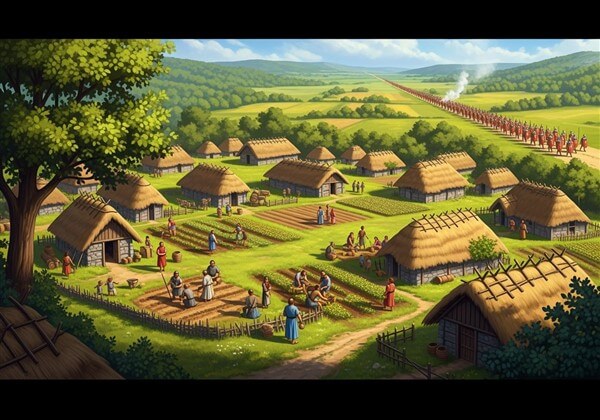
The Iceni and Their Lands
The Iceni tribe resided in the modern region of Norfolk. They were a distinctive group with unique cultural practices. Their prosperity came primarily from agriculture and skilled metalwork, especially in iron. They inhabited a fertile territory with rich soil. This land also gave them access to valuable trade routes, which secured their prominence among Britain’s Celtic tribes. The Iceni had a complex societal structure, likely with a ruling class presiding over communal lands. Moreover, local forms of druidism deeply influenced their religious life.
Initially, the Romans did not conquer the Iceni. Instead, the tribe chose a strategic alliance with Rome. This fragile alliance depended on Roman respect for their autonomy under their own kings. However, the death of King Prasutagus marked a critical turning point. He willed his kingdom jointly to his daughters and the Roman emperor. He hoped this would safeguard his family’s future. Instead, Rome annexed the kingdom and ignored his testament, setting the stage for a bloody conflict.
Roman Expansion and Oppression
The Roman conquest of Britain began in AD 43 under Emperor Claudius. This era saw rapid military expansion across the isles. Roman governance soon followed. While some tribes submitted, others resisted, leading to harsh treatment from Roman authorities. The Romans introduced new administrative systems and heavy taxation. They also confiscated land, which felt alien and oppressive to the native tribes.
A deeply personal and political event triggered Boudicca’s rebellion in AD 60. After Prasutagus’ death, the Romans broke their agreements. They annexed Iceni lands and publicly flogged Queen Boudicca. They also assaulted her daughters. These brutal acts violated the royal family’s sanctity. More importantly, they represented a broader pattern of Roman disregard for local customs. The resulting uprising was a direct response to these immediate injustices. It was also a revolt against decades of accumulated grievances under Roman rule.
Boudicca’s Rebellion
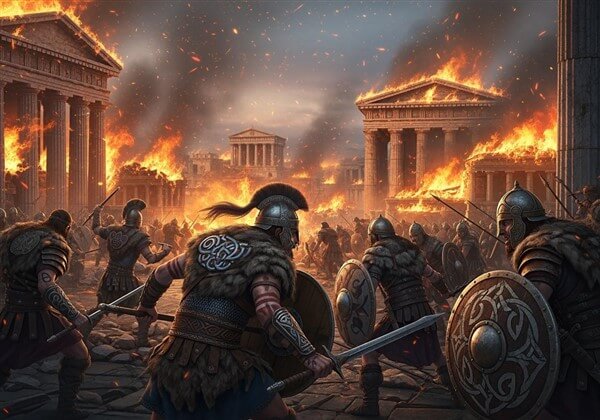
The Uprising Begins
Following the Roman annexation, Boudicca assumed leadership of the Iceni. Her call to arms resonated deeply with her people. It also inspired neighboring tribes who were disgruntled by Roman rule. Her ability to unify these groups under a single cause was unprecedented. She powerfully embodied the collective fury against Roman oppression. Ancient historians Tacitus and Dio recorded her stirring speeches. In them, she appealed to personal freedoms, her family’s honor, and the ancestral rights of the tribes.
The initial phase of Boudicca’s rebellion was swift and brutal. The Iceni, joined by the Trinovantes, first targeted the Roman settlement at Camulodunum (modern Colchester). They razed the city to the ground. The attack’s ferocity and suddenness caught the Romans unprepared. This easy victory marked the beginning of a series of assaults aimed at the heart of Roman power in Britain.
Major Battles and Conquests
After destroying Camulodunum, Boudicca’s forces moved quickly. They employed guerrilla tactics and used their superior knowledge of the local terrain. Her strategy involved avoiding open battles with disciplined Roman legions. Instead, she focused on economically and strategically significant targets. The next major target was Londinium (modern London), a burgeoning trade hub. At the time, the city lacked substantial fortifications.
The battle for Londinium was less a military engagement and more an outright massacre. As Boudicca’s forces descended upon the city, its inhabitants either fled or were slaughtered. The psychological impact of Londinium’s fall was immense. It struck fear into the heart of Roman Britain. This event showcased the rebels’ fierce resolve and their merciless approach to the conflict. Boudicca’s strategic choice of targets proved her acumen. She effectively undermined Roman economic and administrative centers, destabilizing their authority.
The Sacking of Londinium (London)
The sacking of Londinium represents a critical episode in Boudicca’s rebellion. Archaeological evidence supports the historical accounts. A thick red ash layer, dated to around AD 60-61, reveals widespread burning. This destruction indicates the rebels’ intent to completely obliterate Roman symbols and infrastructure. The attack went beyond military objectives; it was a symbolic and clear rejection of Roman culture and authority.
The fall of Londinium significantly weakened Roman control over Britain. The psychological blow to Roman prestige was immense. This, combined with the loss of economic assets, forced a reevaluation of Roman strategies. Although the rebellion was eventually subdued, it exposed critical vulnerabilities in Roman administration. Consequently, Rome introduced reforms aimed at better integrating native populations. The impact of these events influenced long-term Roman policies in Britain for decades to come.
The Legacy and Defeat of Boudicca
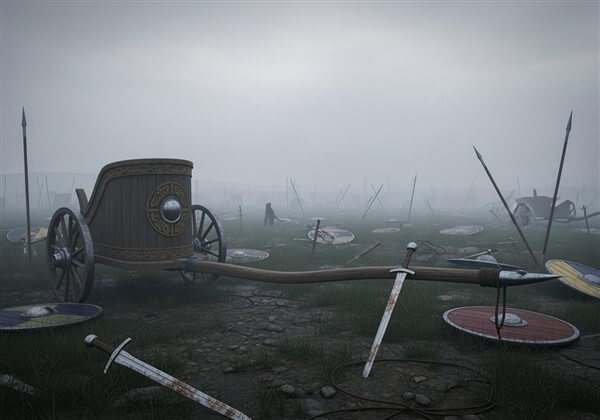
The Final Confrontation
The final battle of Boudicca’s rebellion ended in a catastrophic defeat for the Britons. The Roman historian Tacitus recorded this confrontation in detail. A significantly outnumbered Roman force, led by Governor Suetonius Paulinus, achieved a stunning victory. They faced Boudicca’s numerically superior but less disciplined army. The Romans leveraged their rigorous training and tactical genius. They chose a battleground that limited the Britons’ numerical advantage—a narrow defile backed by a forest. This clever choice prevented the Britons from outflanking them.
Several factors explain Boudicca’s defeat. Primarily, disciplined Roman military tactics outmatched the less organized Briton forces. Secondly, the Britons’ heavy reliance on infantry proved inadequate against Roman military technology and strategy. The aftermath was brutal. Tacitus reports that the Romans killed as many as 80,000 Britons, with only 400 Roman casualties. This crushing defeat effectively quashed the rebellion and reinforced Roman dominance over the island.
Boudicca’s Legacy and Cultural Impact
Boudicca’s legacy transcends her historical defeat. Over the centuries, she has evolved into a powerful symbol of resistance against oppression. Many have romanticized her story, portraying her as a heroine fighting for justice. In British history, people celebrate her as a national icon. She embodies the spirit of independence and the timeless struggle for freedom. Her impact also extends into education. Schools across the United Kingdom explore her life as a key figure of Roman Britain.
In popular culture, Boudicca appears in various forms, including literature, film, and art. This reflects her enduring appeal and symbolic importance. From romanticized Victorian paintings to complex modern portrayals, her image continues to evolve. Furthermore, her story is often referenced in discussions of women’s rights and empowerment. This demonstrates her relevance to contemporary themes of gender and power. Her tale, a blend of historical tragedy and enduring myth, continues to inspire people in many different cultural contexts.
Conclusion
Boudicca’s story is a remarkable narrative of courage against overwhelming odds. As queen of the Iceni, she led an uprising that marks a significant chapter in British history. The scale and ferocity of Boudicca’s rebellion were unprecedented. She united various British tribes against a common enemy. The sacking of Camulodunum, Londinium, and Verulamium sent shockwaves across the Roman Empire. Her campaign demonstrated the potent threat of native resistance. Despite her ultimate defeat, the rebellion had a lasting impact. It forced Roman authorities to reconsider their treatment of native populations. This led to governance adjustments that shaped the future of the province.
Today, Boudicca’s legacy as a symbol of resistance is as potent as ever. She stands as a testament to the spirit of freedom and resilience. She is also an emblem of powerful female leadership in a male-dominated history. Her story resonates in contemporary discussions about gender and power. It illustrates how one woman can lead a formidable challenge against systemic injustice. In popular culture, art, and literature, creators portray her with awe and inspiration. Her tale continues to challenge our understanding of leadership and resistance.
Further Readings
Aldhouse-Green, M. (2006). Boudica Britannia: Rebel, War-leader and Queen. Pearson Education Limited.
Cunliffe, B. (2005). Iron Age Communities in Britain. Routledge.
Dio, C. (3rd century). Roman History [Translated version referenced].
Fraser, A. (1988). The Warrior Queens: Boadicea’s Chariot. Vintage.
Fraser, A. (1988). The Warrior Queens: The Legends and the Lives of the Women Who Have Led Their Nations in War. Vintage.
Frere, S. (1987). Britannia: A History of Roman Britain. Routledge & Kegan Paul.
Gardner, P. (1999). The Roman Conquest of Britain: The Impact and Legacy. Bloomsbury Academic.
Goldsworthy, A. (2003). The Complete Roman Army. Thames & Hudson.
Hingley, R., & Unwin, C. (2005). Boudica: Iron Age Warrior Queen. Hambledon & London.
Marshall, G. (1988). Evidence for Fire Destruction in Roman London. Archaeological Journal, 145(1), 32-45.
Mattingly, D. (2006). An Imperial Possession: Britain in the Roman Empire. Penguin Books.
Millett, M. (1990). The Romanization of Britain: An Essay in Archaeological Interpretation. Cambridge University Press.
Pryor, F. (2004). Britain BC: Life in Britain and Ireland Before the Romans. HarperCollins.
Salway, P. (2001). A History of Roman Britain. Oxford University Press.
Tacitus. (117). The Annals of Imperial Rome [Translated version referenced].
Webster, G. (1999). Boudica: The British Revolt Against Rome AD 60. Routledge.
Webster, G. (1999). The Roman Invasion of Britain. Routledge.
Webster, G. (2005). The Roman Imperial Army of the First and Second Centuries A.D. University of Oklahoma Press.