

 Home
Home ByKus Academy
 History
 Philosophy
 Anthropology
 Mythology
 Theology
 News
News World
World Economy & Finance
 Health & Lifestyle
 Science & Tech
 Culture
 Cinemania
 Bookshelf
 Who is?
 What is?
 Art
Art Türkçe


Introduction
Financial markets serve as the backbone of global economic systems. They influence everything from daily commodity prices to national economic stability. These complex networks facilitate efficient capital allocation and liquidity throughout economies worldwide. Financial markets act as vital conduits. They transfer funds from savers to borrowers seamlessly. This process enables both individual wealth building and corporate expansion. The intricate nature of these markets reflects modern economic interdependencies.

However, financial markets can appear mysterious to newcomers. Volatile price movements and complex instruments often confuse beginners. This comprehensive guide aims to demystify these fundamental concepts. We will explore what financial markets are and their primary purposes. Additionally, we’ll examine key participants and various market types. Furthermore, this guide covers trading mechanisms and regulatory frameworks. By the end, readers will understand financial markets’ role in the broader economy.
What Are Financial Markets?

Definition and Core Concepts
Financial markets are specialized arenas where participants trade securities and commodities. These platforms reflect supply and demand through real-time pricing. They enable individuals and organizations to buy and sell financial instruments efficiently. Several types of financial markets exist in today’s economy. Stock markets facilitate corporate share trading. Bond markets handle debt securities exchange. Commodities markets trade physical goods like oil and gold. Forex markets enable currency exchange between nations.
Each market operates under unique conditions and serves specific functions. Stock markets allow businesses to raise capital through share issuance. Investors gain company ownership opportunities and potential dividend benefits. Meanwhile, bond markets enable governments and corporations to borrow funds. This borrowing supports operations and major projects through debt securities. Commodities markets provide essential price-setting platforms for various industries. These markets trade both physical and digital goods effectively. Forex markets support international trade by determining currency exchange rates. This function proves crucial for global business operations.
Primary Functions of Financial Markets
Financial markets primarily allocate resources efficiently throughout the economy. They match buyers with sellers seamlessly. This matching process facilitates capital formation for business expansion. Additionally, governments can fund infrastructure development projects. These markets provide essential liquidity to economic participants. Investors can convert investments to cash quickly when needed. This liquidity supports overall economic stability and investor confidence. Market participants feel secure knowing they can exit positions.
Financial markets also drive the price discovery process effectively. Trading activities establish fair prices based on supply and demand. This transparency benefits both investors and security issuers. Everyone can assess financial instrument values accurately. Moreover, these markets contribute significantly to risk management strategies. They provide futures, options, and derivative instruments. These tools allow participants to hedge against price movements. Economic risks become more manageable through these mechanisms.
Key Market Participants
Financial markets attract diverse participants with varying investment goals. Individual investors typically seek personal wealth accumulation over time. They may invest directly in stocks and bonds. Alternatively, they choose collective investment schemes like mutual funds. Institutional investors wield substantial influence due to their buying power. Pension funds, mutual funds, and insurance companies manage large capital pools. These entities contribute significantly to market liquidity and stability. Their trading volumes affect overall market dynamics.
Governments participate as both issuers and regulators in financial markets. They issue treasury bonds to raise public project funds. Simultaneously, they regulate markets to ensure fair trading practices. Government intervention helps implement monetary and fiscal policies. Corporate entities also play crucial roles in financial markets. They issue securities to raise capital for expansion. Companies also invest surplus funds in various market instruments. This dual role makes them both issuers and investors.
Types of Financial Markets
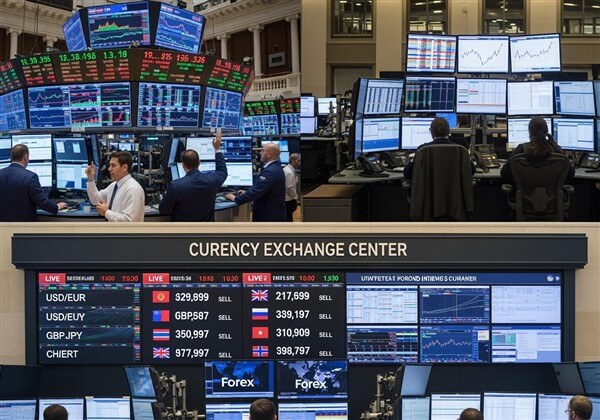
Stock Markets Explained
Stock markets provide venues for publicly listed company shares trading. These platforms enable corporations to raise capital from investors. In exchange, investors receive ownership stakes through stock purchases. This relationship forms the foundation of equity investing. Two primary stock types exist in financial markets today. Common stocks offer voting rights and potential dividend payments. Preferred stocks provide higher dividend priority but limited voting rights. Both types serve different investor preferences and risk tolerances.
Major exchanges facilitate stock trading through centralized platforms. The New York Stock Exchange and NASDAQ lead global markets. These exchanges ensure fair trading practices and transparent pricing. Real-time information helps investors make informed decisions. Stock market performance often reflects national economic health indicators. Strong markets suggest robust economic conditions. Conversely, declining markets may signal economic challenges ahead. This relationship makes stock markets valuable economic barometers.
Bond Markets Overview
Bond markets represent fixed-income securities where investors loan money. Borrowers typically include corporations and government entities. These markets prove crucial for long-term financial planning. They provide steady income through regular interest payments. Various bond types exist based on their issuers. Government bonds offer lower risk but modest returns. Municipal bonds provide tax advantages for certain investors. Corporate bonds yield higher returns but carry increased risk. Each type serves different investment strategies.
Bond trading occurs primarily in over-the-counter markets. Participants negotiate terms directly without centralized exchanges. This structure offers flexibility but reduces transparency compared to stock markets. Direct negotiation allows customized terms for specific needs. Bonds generally provide safer investments compared to stocks. They offer predictable income through scheduled interest payments. However, they face interest rate, inflation, and credit risks. These factors can significantly affect bond values and yields.
Forex Markets Dynamics
The foreign exchange market represents the world’s largest financial market. Daily trading volumes exceed six trillion dollars globally. This massive scale makes forex markets highly liquid. Currency trading supports international business and trade activities. Forex markets operate continuously across global time zones. Major financial centers facilitate round-the-clock trading activities. This constant operation makes forex markets unique among financial markets. Traders can respond to global events immediately.
Currencies trade in pairs within forex markets. Exchange rates fluctuate based on multiple economic factors. Interest rates, economic stability, and geopolitical events influence prices. These variables create both opportunities and risks for traders. The forex market’s accessibility attracts many individual traders. However, significant risks accompany these opportunities. High volatility and leverage effects can amplify both gains and losses. Proper education and risk management remain essential for success.
How Financial Markets Operate

Trading Mechanisms and Venues
Financial markets utilize various trading mechanisms for security transactions. Exchanges and over-the-counter markets represent the primary venues. Each system offers distinct advantages for different trading needs. Understanding these differences helps investors choose appropriate platforms. Exchanges operate under centralized formats with regulated oversight. The New York Stock Exchange and London Stock Exchange exemplify this model. All trades occur in single locations, either physically or virtually. This centralization ensures transparency and regulatory compliance.
Over-the-counter markets function through decentralized trading networks. Participants trade securities directly between themselves without exchange oversight. This flexibility allows customized terms and specialized instruments. However, reduced transparency and higher counterparty risks emerge. OTC markets commonly handle derivatives, bonds, and currency trading. These instruments often require flexible terms and customization. Direct negotiation between parties enables this flexibility. Market participants must carefully assess counterparty creditworthiness in OTC transactions.
Broker and Dealer Functions
Brokers and dealers serve as essential intermediaries in financial markets. Each group plays distinct roles in facilitating transactions. Understanding these differences helps investors choose appropriate service providers. Both types contribute significantly to market liquidity and efficiency. Brokers act as agents representing their clients’ interests. They facilitate transactions by finding suitable counterparties for trades. Brokers earn commissions for their services without taking security positions. Their primary responsibility involves ensuring fair and legal transaction execution.
Dealers operate as principals trading on their own accounts. They take positions in securities to provide market liquidity. This involvement allows dealers to profit from bid-ask spreads. However, their dual role can create potential conflicts of interest. Regulatory oversight helps manage potential conflicts between dealer roles. Consumer protection remains a priority in dealer regulation. Market makers often function as dealers to ensure continuous liquidity. This service proves essential for smooth market operations.
Regulatory Framework Importance
Regulation ensures stability, integrity, and transparency in financial markets. Various regulatory bodies oversee different market segments globally. The Securities and Exchange Commission leads U.S. market regulation. Similar bodies exist in other major financial centers worldwide. Effective regulation protects investors from fraud and market manipulation. Rules prevent systemic failures that could destabilize entire markets. Regulators set standards for fair, orderly, and efficient trading. These measures facilitate healthy capital formation processes.
The 2008 global financial crisis highlighted regulatory importance. Subsequent reforms strengthened oversight of financial institutions significantly. Improved risk management standards now govern market participants. Greater transparency requirements help prevent similar future crises. Modern regulatory frameworks continue evolving with market developments. Digital currencies and blockchain technology present new challenges. Regulators adapt rules to address emerging risks and opportunities. This evolution maintains investor confidence in financial markets.
Conclusion
This comprehensive exploration of financial markets has covered essential concepts for beginners. We examined market definitions, purposes, and key participants thoroughly. Various market types including stocks, bonds, and forex were discussed. Additionally, we explored trading mechanisms and regulatory frameworks. Financial markets serve crucial roles in global economic systems. They facilitate efficient resource allocation and provide essential liquidity. Price discovery mechanisms ensure fair valuations for all participants. Risk management tools help investors navigate market uncertainties effectively.
Understanding these fundamentals provides a solid foundation for further learning. Behavioral finance offers insights into psychological market influences. Derivatives markets present complex instruments affecting financial stability. Digital currencies and blockchain technology represent emerging frontiers. Continued education remains essential for financial market success. Academic journals provide cutting-edge research and analysis. Financial seminars offer networking and learning opportunities. Market simulations allow practical application of theoretical concepts.
The financial markets landscape continues evolving rapidly with technological advances. New opportunities emerge alongside traditional investment vehicles. Staying informed about market developments ensures better investment decisions. This knowledge empowers individuals to participate confidently in financial markets.
Further Readings
Acharya, V. V., Cooley, T., Richardson, M., & Walter, I. (2011). Market failures and regulatory failures: Lessons from past and present financial crises. Journal of Economic Perspectives, 25(1), 3-28.
Bodie, Z., Kane, A., & Marcus, A. J. (2014). Investments (10th ed.). McGraw-Hill Education.
Fabozzi, F. J., Modigliani, F., & Jones, F. J. (2014). Foundations of financial markets and institutions (4th ed.). Pearson.
Harris, L. (2003). Trading and exchanges: Market microstructure for practitioners. Oxford University Press.
Hull, J. C. (2018). Options, futures, and other derivatives (10th ed.). Pearson.
La Porta, R., Lopez-de-Silanes, F., & Shleifer, A. (2006). What works in securities laws? Journal of Finance, 61(1), 1-32.
Madura, J. (2018). Financial markets and institutions (12th ed.). Cengage Learning.
Mishkin, F. S., & Eakins, S. G. (2018). Financial markets and institutions (9th ed.). Pearson.
O’Hara, M. (1995). Market microstructure theory. Blackwell Publishers.
Stulz, R. M. (2010). Credit default swaps and the credit crisis. Journal of Economic Perspectives, 24(1), 73-92.