
 Home
Home ByKus Academy
 History
 Philosophy
 Anthropology
 Mythology
 Theology
 News
News World
World Economy & Finance
 Health & Lifestyle
 Science & Tech
 Culture
 Cinemania
 Bookshelf
 Who is?
 What is?
 Art
Art Türkçe


Introduction
Paganism is a term often shrouded in mystery. Yet, it holds a key place in the tapestry of ancient history. This complex set of spiritual beliefs predates many modern religions. It offers profound insight into the lives of our ancestors. Understanding paganism is not just about exploring old myths. It is crucial for comprehending the cultural and social landscapes that shaped early civilizations. From polytheistic worship to sacred rites, paganism formed the spiritual backbone of many ancient societies.

The word ‘paganism’ itself comes from the Latin ‘paganus.’ It originally referred to rural people who clung to old customs, in contrast to spreading Christianity. Today, the term covers a wide array of traditions. These traditions influenced everything from laws to social structures across cultures. By exploring the rise of paganism, this post will illuminate the profound impact these beliefs had on art, philosophy, and daily life. This topic enriches our understanding of history and human spirituality.
The Origins of Paganism
Definition and Etymology
Paganism includes a variety of polytheistic, animistic, and pantheistic beliefs. These practices were dominant before the Abrahamic religions became widespread. The term “pagan” derives from the Latin word “paganus,” meaning “country dweller.” It later described those holding pre-Christian beliefs in the Roman Empire. This term grouped ancient religions together, despite their vast differences. Historically, paganism refers to the religions of ancient Greece and Rome. It also includes those of the Egyptians, Norse, and other civilizations with multiple deities.
The broad spectrum of paganism features great diversity and local character. In many cases, these ancient beliefs were deeply tied to the natural world. They featured gods and spirits linked to natural elements. Unlike monotheistic religions with a single sacred text, pagan practices were often passed down orally. They varied greatly from one region to another, reflecting their unique environments. This diversity is key to understanding the endurance of pagan traditions.
Early Evidence of Pagan Practices
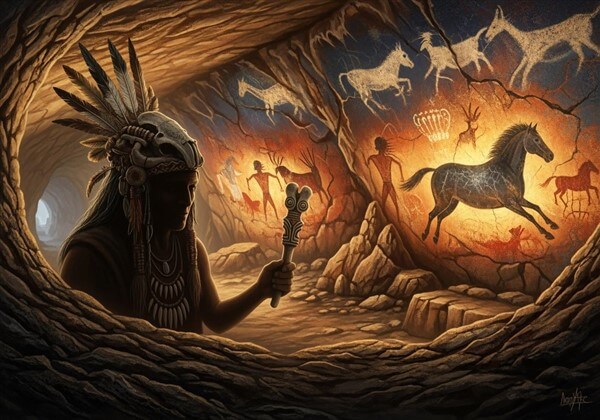
Archaeological and textual evidence provides substantial insight into early pagan practices. For instance, cave paintings, like those in Lascaux, France, suggest ritual activities. These rituals likely aimed to secure successful hunts by invoking animal deities. In addition, artifacts like the Nebra Sky Disk from Germany (1600 BCE) show a sophisticated understanding of celestial cycles in pagan rituals. Textual evidence from Mesopotamia, including hymns to gods like Inanna, also reveals the complexity of early pagan worship.
Furthermore, the discovery of the Gundestrup cauldron in Denmark is highly significant. This decorated silver vessel is thought to depict Celtic deities and rituals. It illustrates the prevalence of intricate pagan practices across Europe. These artifacts, along with Egyptian religious texts like the Pyramid Texts, clearly show the structured nature of pagan worship. This worship was integral to the social and political fabric of these ancient societies.
Geographic Spread
Paganism originated in Neolithic and Bronze Age societies. It spread across different regions through migration, trade, and sometimes conquest. In Europe, archaeological records show pre-Roman pagan practices from the British Isles to Eastern Europe. The spread of these practices often coincided with the diffusion of Indo-European languages. This is suggested by linguistic and mythological similarities across the continent.
In the Near East, Mesopotamian paganism’s influence extended to the Eastern Mediterranean. It impacted the religious practices of Canaanites and later the Phoenicians. They carried these beliefs to North Africa and the Iberian Peninsula. Additionally, the Silk Road helped spread certain pagan beliefs eastward. These beliefs adapted and merged with local traditions in Central Asia and beyond. This diffusion highlights not only its widespread appeal but also its ability to enhance local traditions.
Core Beliefs and Practices
Polytheism and Animism
Polytheism was a core belief in ancient paganism. It is the belief in multiple deities, each embodying specific aspects of life, such as war or agriculture. Communities not only worshipped these deities but also saw them as integral to daily survival. Animism, another key aspect, gave a spiritual essence to all parts of the natural world. This included rivers, trees, and rocks. This worldview saw nature as sacred and alive. It recognized no distinction between the spiritual and physical worlds.
The diversity of deities and spirits allowed for a rich tapestry of myths. Each myth explained natural phenomena or human emotions as divine interactions. For example, Norse mythology, with gods like Thor and Odin, features a pantheon of complex characters. Their stories influenced everything from weather to warfare. Similarly, in animistic systems, spirits were not distant gods. They were accessible presences that influenced daily life and required respect through rituals.
Rituals and Ceremonies
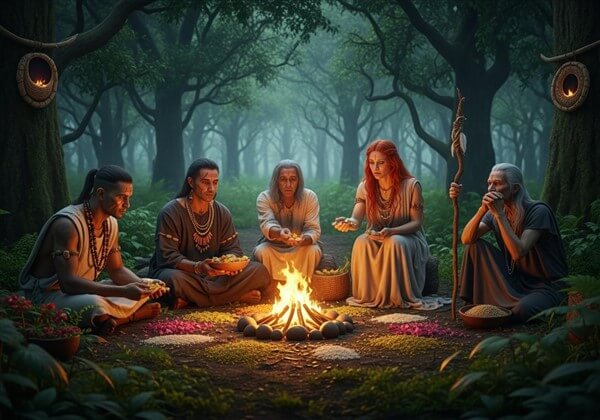
Rituals and ceremonies in pagan traditions were incredibly diverse. However, many shared common themes, like celebrating seasonal cycles and life events. These rituals often included offerings and sacrifices. People performed them to gain the favor of deities for fertility, protection, or victory. Seasonal festivals, such as the Celtic Samhain or the Roman Saturnalia, marked important times of the year. They integrated community bonding with spiritual reverence.
Moreover, rituals often involved elaborate ceremonies with music, dance, and symbolic acts. These acts included lighting fires or reenacting mythological stories. These activities reinforced a community’s cultural identity. They also educated younger generations about their society’s beliefs and values. In the Greco-Roman world, rituals like the Eleusinian Mysteries were considered essential. They promised spiritual renewal and a better afterlife for participants.
Role of Priests and Priestesses
In pagan societies, priests and priestesses held significant roles. They often served as both spiritual leaders and community advisors. Their responsibilities went beyond leading rituals. They were also integral to education, politics, and law. In ancient Egypt, for example, the priesthood was deeply involved in state administration. They controlled large parts of the economy through temple estates. Similarly, in Celtic societies, Druids conducted religious ceremonies. They were also revered as judges and teachers with vast knowledge.
These religious figures were often believed to have divine connections. This allowed them to mediate between the gods and the people. They performed essential functions like divination, healing, and interpreting omens. These functions were crucial for making decisions in both private and public life. The influence of priests and priestesses also extended to educating the elites. This dual role of religious and secular authority boosted their status and wove religion deeply into daily life.
Paganism in Ancient Civilizations

Mesopotamia
In ancient Mesopotamia, the pantheon of gods was extensive and deeply integrated into society. Primary deities like Anu, Enlil, and Enki held dominion over different aspects of the world. They influenced everything from legal systems to farming. Temples dedicated to these gods were the centers of city-states. Religious ceremonies often coincided with political events, reinforcing the gods’ role in governance. This theocratic structure showed a world where divine will directly affected life.
Mesopotamian religious practices included divination, sacrifice, and public processions. These events celebrated the myths of their gods. For instance, the Akitu New Year’s festival reasserted the king’s divine mandate. It did so by reenacting the creation myth and the victory of the god Marduk over chaos. These rituals were not just religious observances. They were crucial for maintaining social and cosmic order. Understanding the rise of paganism in these regions shows its deep societal integration.
Ancient Egypt
Ancient Egyptian paganism was intricately woven into daily life. The divine was present in every aspect of the world. This included the Nile River, vital for agriculture, and the pharaoh, considered a living god. Egyptian religious practices focused on maintaining cosmic order, or Ma’at. This focus led to elaborate death rituals like mummification. These rituals were intended to ensure the deceased’s safe passage to the afterlife.
The pharaoh’s role was central. He was not only a ruler but also an intermediary between the gods and the people. He performed rituals essential for the land’s prosperity. Major religious festivals, like the Beautiful Festival of the Valley, connected the community, the pharaoh, and the deities. These celebrations affirmed their eternal relationships. These practices highlight the Egyptians’ view of life and death as a continuous cycle rooted in divine interaction.
Greco-Roman World
In the Greco-Roman world, paganism profoundly shaped societal norms, laws, and philosophy. The pantheon of gods, including Zeus and Athena, was integral to the civic identity of Greek city-states. People believed these deities upheld social order, so civic and religious duties were intertwined. Philosophical schools like Stoicism and Platonism explored these divine relationships. They argued that understanding the divine was key to an ethical life.
Roman religion adopted many Greek pagan elements. However, it added a more formal structure of state worship. This included the emperor’s cult, where the emperor was honored as a divine figure. This integration of religion into state governance helped unify the diverse peoples of the empire. Religious festivals and public rituals in Rome were crucial parts of the social and political calendar. They reinforced the bonds between the state, the community, and the divine.
The Role of Mythology
Mythology as a Reflection of Society
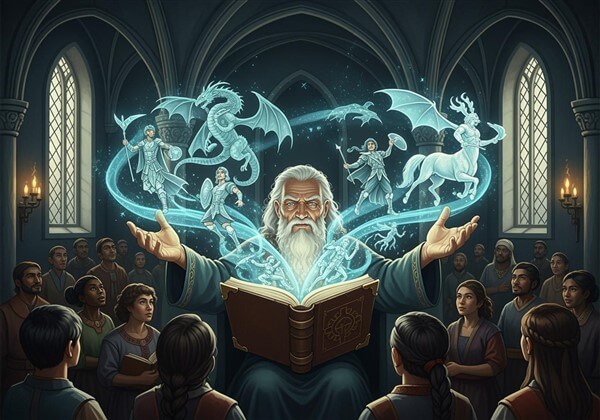
Myths in ancient cultures were a crucial reflection of their values, fears, and hopes. These narratives conveyed a community’s foundational beliefs. They often did so through divine or heroic figures whose actions defined these values. For example, myths codified prized virtues like bravery and wisdom. They also explored human failings like betrayal and jealousy. They provided shared stories that helped explain the world and guide behavior. The role of mythology is central to understanding the rise of paganism.
Moreover, myths offered a way for societies to confront their collective fears. Epic battles between gods and monsters could represent the struggle between chaos and order. These stories reflected anxieties about natural disasters or invasion. They also allowed individuals to project their own conflicts onto a cosmic scale. This gave them a sense of purpose. Through these narratives, ancient societies could explore complex questions about morality and existence.
Creation Myths and Heroic Tales
Creation myths across different cultures explain the origins of the world and humanity. They often serve as foundational texts that reveal a culture’s values. These myths varied widely. The Babylonian “Enuma Elish” portrays the cosmos emerging from conflict. In contrast, Egyptian mythology describes a more serene creation by the god Atum. These stories defined the human role within the world and established a cosmic order.
Heroic tales, such as those of Gilgamesh or Hercules, often complemented these creation stories. They illustrated the trials a hero must endure to maintain social order. These narratives served as moral guides, teaching virtues like courage and loyalty. They also provided a space to debate and redefine values over time. Heroes embodied the ideals of their cultures but also their contradictions. Their dilemmas forced audiences to reconsider what it means to be virtuous.
Integration with Literary and Art Forms
Mythology profoundly influenced ancient literature, art, and theater. In literature, myths provided rich material for epic poems like Homer’s Iliad and Odyssey. These works not only entertained but also offered moral lessons. They helped transmit cultural heritage and became a cornerstone of education. In art, myths appeared in sculptures and vase paintings. These depictions reinforced religious values in public and private spaces.
In theater, Greek tragedies and comedies often drew on mythological themes. They explored complex human emotions through stories of gods and heroes. These performances were not just entertainment; they were part of religious festivals. They offered a space for communal reflection on ethical questions. The integration of mythology into these forms kept it a vibrant part of cultural life. It continually adapted to reflect the changing concerns of society.
Paganism and Society
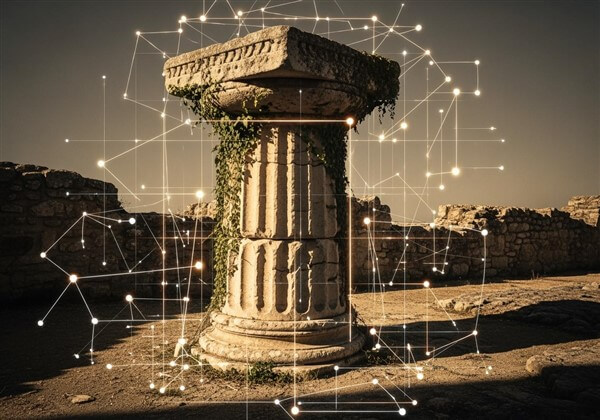
Social Structure and Pagan Beliefs
Pagan beliefs were deeply interwoven with the social structures of ancient societies. Deities often embodied the principles upon which these societies were founded. In civilizations like Mesopotamia and Egypt, gods were directly linked to the ruling elite. Kings and pharaohs were often seen as divine or semi-divine figures. This legitimized their rule and reinforced social hierarchies. This intertwining of religion and state upheld the social order.
Furthermore, rituals and religious festivals were crucial in reinforcing social bonds. The elite often presided over these events. For example, in ancient Rome, participation in religious ceremonies was strictly regulated by social class. This reflected and perpetuated the existing social structure. Religious offices were often reserved for members of certain classes. These practices ensured religion was a powerful component of societal governance.
Conflict and Coexistence with Emerging Religions
The interaction between paganism and emerging monotheistic religions was complex. It was marked by periods of both conflict and adaptation. As Christianity spread through the Roman Empire, it often clashed with established pagan traditions. Early Christian writers frequently attacked paganism, portraying it as superstition. This sometimes led to social and political tensions. However, these conflicts were also accompanied by significant periods of coexistence and synthesis.
For instance, communities reinterpreted or repurposed many pagan festivals within a Christian context. This helped ease the transition for converts. The celebration of Christmas on December 25th, close to the Roman festival of Sol Invictus, is one such example. This period of adaptation was not without its challenges. It often involved complex negotiations over identity and theology. This dynamic interaction is a key part of the story of the rise of paganism’s eventual decline and transformation.
Legacy and Modern Interpretations
The legacy of ancient paganism is evident in modern culture and spirituality. Many elements of pagan rituals and symbols have been integrated into modern practices. They are often reinterpreted through the lens of contemporary values. For instance, modern neo-pagan movements like Wicca and Druidry draw on ancient pagan symbols and deities. They emphasize themes like ecological responsibility and gender equality, which resonate with modern issues.
These modern interpretations often reflect a romanticized view of the past. They seek to adapt ancient practices for modern contexts. This resurgence of interest in paganism can be seen as a critique of modern materialism. Individuals and communities are seeking a deeper connection to the natural world. As such, ancient paganism continues to influence modern culture. It does so through spiritual lineages, literature, art, and popular culture.
Conclusion
The influence of paganism on modern spirituality and cultural heritage is profound. Today, neo-pagan movements like Wicca and Druidry are seeing a resurgence. They draw heavily on ancient pagan traditions and rituals. These movements are not mere revivals; they are modern reinterpretations. They adapt core pagan principles to contemporary life, emphasizing values like environmentalism and spiritual pluralism. This trend highlights a growing desire to reconnect with a more holistic, nature-centric spiritual practice. This trend shows how the legacy of the rise of paganism continues to evolve and enrich our modern world.
Preserving and studying pagan traditions is crucial for understanding our collective past. By examining these ancient beliefs, we gain insights into how human societies interacted with the world. The study of paganism offers a unique perspective on the development of religion. Moreover, in a world where cultural heritage is often lost, preserving these traditions helps maintain diversity. Recognizing the value of pagan traditions enriches our understanding of the past and informs our present.
Further Readings
Adler, M. (2006). Drawing Down the Moon: Witches, Druids, Goddess-Worshippers, and Other Pagans in America. Penguin Books.
Armstrong, K. (2000). The History of God. Ballantine Books.
Assmann, J. (2001). The Search for God in Ancient Egypt. Cornell University Press.
Beard, M., North, J., & Price, S. (1998). Religions of Rome: Volume 1, A History. Cambridge University Press.
Bottero, J. (2001). Everyday Life in Ancient Mesopotamia. Johns Hopkins University Press.
Cameron, A. (2006). The Mediterranean World in Late Antiquity. Routledge.
Cunliffe, B. (1997). The Ancient Celts. Oxford University Press.
Eliade, M. (1974). Patterns in Comparative Religion. Sheed & Ward.
Griffin, J. (1980). Homer on Life and Death. Clarendon Press.
Jones, L. (2004). Encyclopedia of Religion. Macmillan Reference USA.
Lane Fox, R. (1986). Pagans and Christians. Knopf.
Lindow, J. (2001). Norse Mythology: A Guide to Gods, Heroes, Rituals, and Beliefs. Oxford University Press.
MacMullen, R. (1981). Paganism in the Roman Empire. Yale University Press.
Parker, R. (2003). Polytheism and Society at Athens. Oxford University Press.
Schafer, B. E. (1997). The Temples of Ancient Egypt. Cornell University Press.